Start with a decision a meeting planner has to make. ERIA founder Nikita Khandheria wrote a guest column for Smart Meetings about the experiences people describe to colleagues after a corporate event. The publication credited her as the author. A venue can follow that example by contributing firsthand expertise even when it has no new space or event to announce.
Smart Meetings guest column by ERIA founder Nikita Khandheria
Choose a problem a planner recognizes
In Khandheria’s column, word-of-mouth referrals gave her a reason to ask what guests actually remembered. She cited a figure from ERIA’s own leads and identified where it came from. A reader could understand the company’s experience without mistaking a single operator’s numbers for industry research.
Look through your last three event debriefs for a recurring question. Perhaps the general session ran over each morning, but only one agenda let attendees reach the breakouts on time. Compare the rooms, the routes and the number of people moving. A column about scheduling transitions now has an observation to investigate, a choice the reader can make and a setting in which that choice mattered.
Outline the argument before describing the event
Open at the point of decision. Who had to act, what options did they have, and what was at stake? In the next paragraph, identify the source of your evidence. A time-stamped run of show can document a delay. Staff recollections can tell you what people experienced. Label each accordingly.
Close by giving the reader a small way to test the idea. For a breakout transition, that might mean walking the longest route with a staff member before doors open and then adjusting the printed schedule. If the conclusion depends on a small room or a particular staffing level, say so.
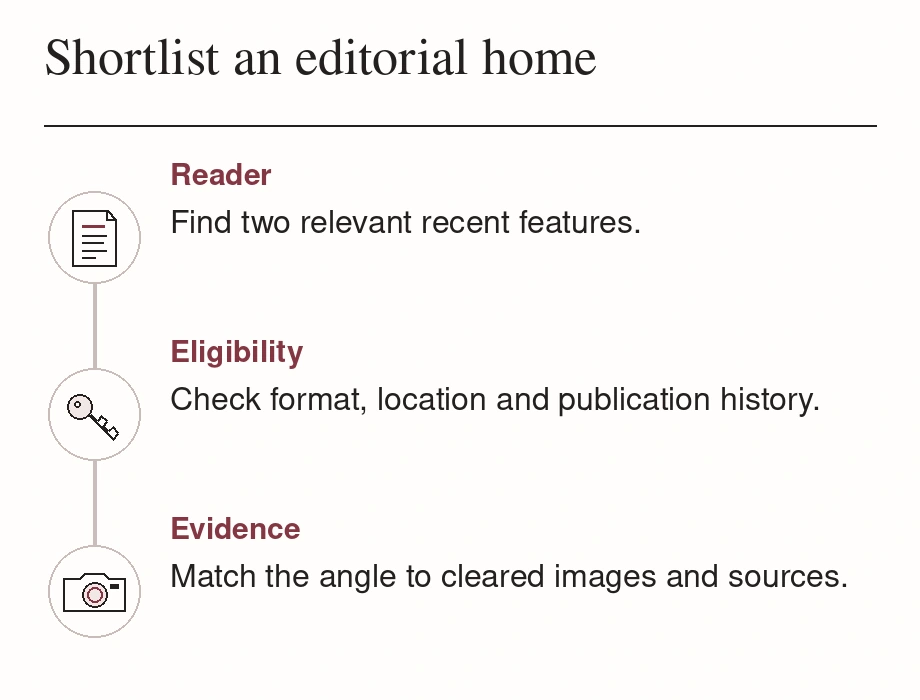
Match the draft to the publication’s rules
Smart Meetings welcomes story ideas and submissions. Its editorial policy sets ordinary lengths of 700–800 words for a column and 2,200–2,500 for a feature or destination story, unless the editor advises otherwise. The outlet asks for original, nonpromotional writing and restricts republication. Read those terms before offering an essay that has appeared in a company newsletter or that you plan to reuse.
The policy calls for email delivery and a 50-word biography with the author’s name, title, company and email. Disclose relevant business relationships. If a graph or photograph is essential, the outlet asks for a separate attachment with publication rights secured. Its contact page provides a general inquiry route if you need the appropriate editorial contact.
Common questions
Was ERIA interviewed for the example?
The published article names Khandheria as a guest author. It demonstrates a contributed column that uses the writer’s own business experience.
Can I use client results without naming the client?
Explain the setting and how the result was measured, and confirm which details you have permission to share. If anonymity removes the evidence the reader needs, choose another example.
Sources
Keep reading
- How wedding professionals can answer a journalist’s expert quote request
- Where to submit wedding photos for publication
- 9 of the best PR agencies for weddings, bridal fashion and luxury hospitality worldwide