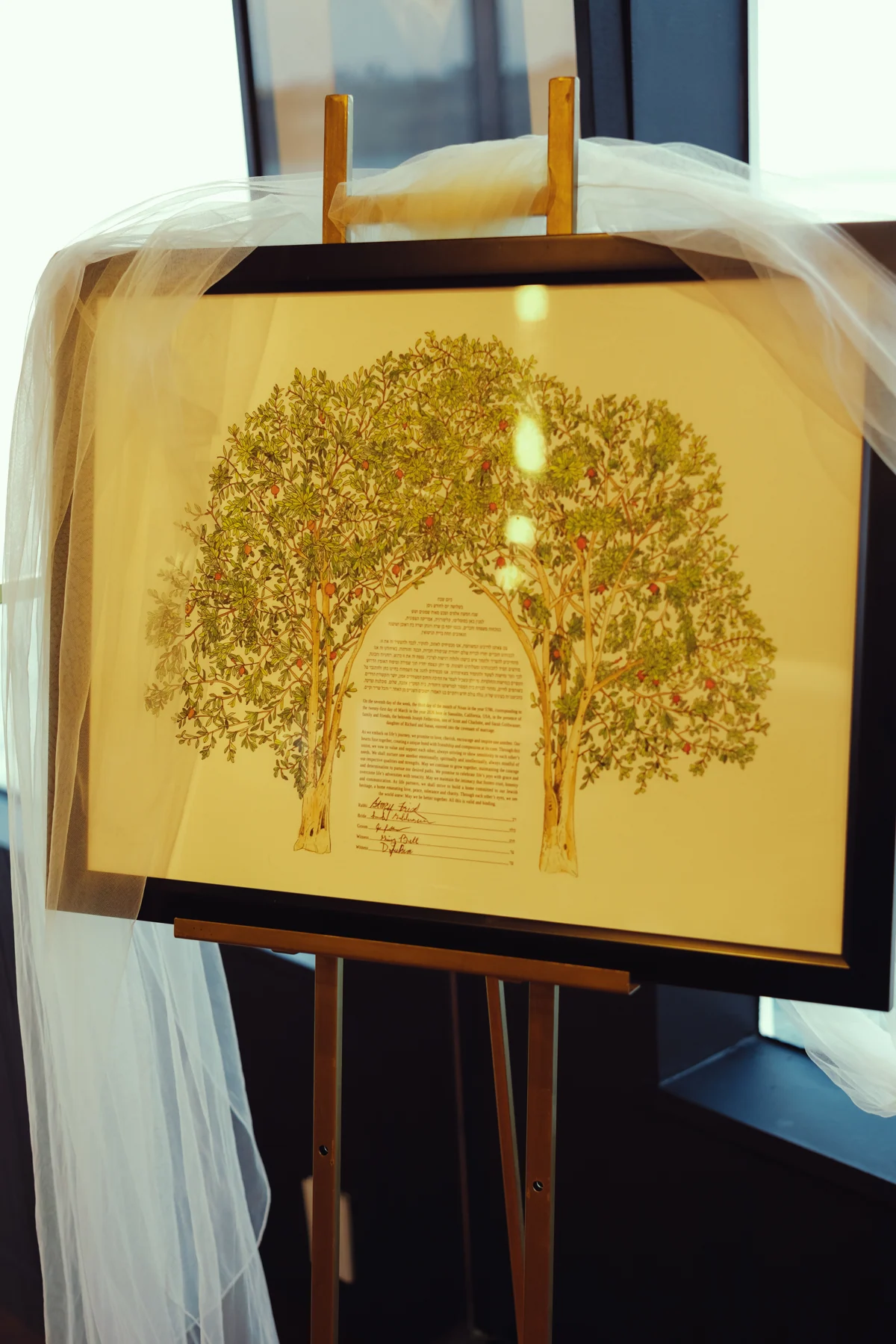
Start by asking the couple what they called each event and what they want a reader to remember. A weekend with three venues, several languages and different creative teams can still have a clear narrative. One decision or relationship often gives the story its thread. A timeline and a caption sheet keep the particulars attached to the right day.
Interview the people who made the choices
Ask both partners how they describe their backgrounds, the ceremony and the people who led it. Invite them to spell terms and names, including diacritics. If an item was borrowed or remade, ask who owned it, who altered it and who wore it. Ask permission before sharing remarks attributed to parents, officiants or guests. Write down the family’s explanation when a ritual has personal significance.
Consider the example of Ramya Velury and Joseph Harris in Vogue. The article explains that their priest translated from Sanskrit into English during their Telugu Hindu ceremony and recounts the couple jumping the broom at the end. Those two observable decisions give readers a sequence and the couple’s perspective. A pitch about another wedding needs that family’s own account.
Build a separate record for each event
Use one row per event, even when two celebrations share a venue. Each row needs a date, the couple’s preferred event name, the location they approve for publication, the photographer and gallery folder, the principal participants and the relevant vendors. Give portraits the same event label as the outfit pictured. This prevents a Friday designer credit from following a Saturday portrait.
- For an example Friday welcome dinner, record who hosted, which outfits appear and whether the toasts can be quoted.
- For an example Saturday morning ceremony, record who led it, any family-approved description and photography restrictions.
- For an example Saturday evening reception, confirm the menu, musicians, décor team and which relatives may be named.
Edit across the weekend without flattening it
Select an opening image that introduces the couple or place. Then pair one wide scene with one telling interaction from each event you discuss. A frame of someone fastening a piece of jewelry can connect two days if the family explains why it was worn twice. Three similar entrances may each matter personally, while only one has to carry the opening of a feature.
Make captions specific enough to survive a layout change. An example is “At the welcome dinner, Asha’s aunt fastens the clasp on the necklace she lent her for the evening.” This invented caption identifies the relationship and what happened. Obtain permission, check the name and replace every detail with a verified one. For private ceremonies, ask whether a room portrait, a written recollection or no coverage at all is the couple’s preference.
Shape the pitch for one publication
For South Asian weddings, Maharani Weddings has a real wedding submission form and a separate questionnaire that asks about outfits, design and events beyond the ceremony. Use the relevant route for the story you have. For a broader outlet, write one paragraph about the decision connecting the events, then add the timeline, gallery and vendor credits in the requested format. Have both partners review the factual descriptions before you submit.
Common questions
Should every event receive the same number of photographs?
Follow the outlet’s image limits. Give more space to events that advance the story the couple chose, and make the transitions clear for a reader seeing the family for the first time.
How do we credit different people who did similar jobs?
Attach the event name to the role. For example, list Friday dinner florals separately from Saturday ceremony florals and verify the business names with each team.