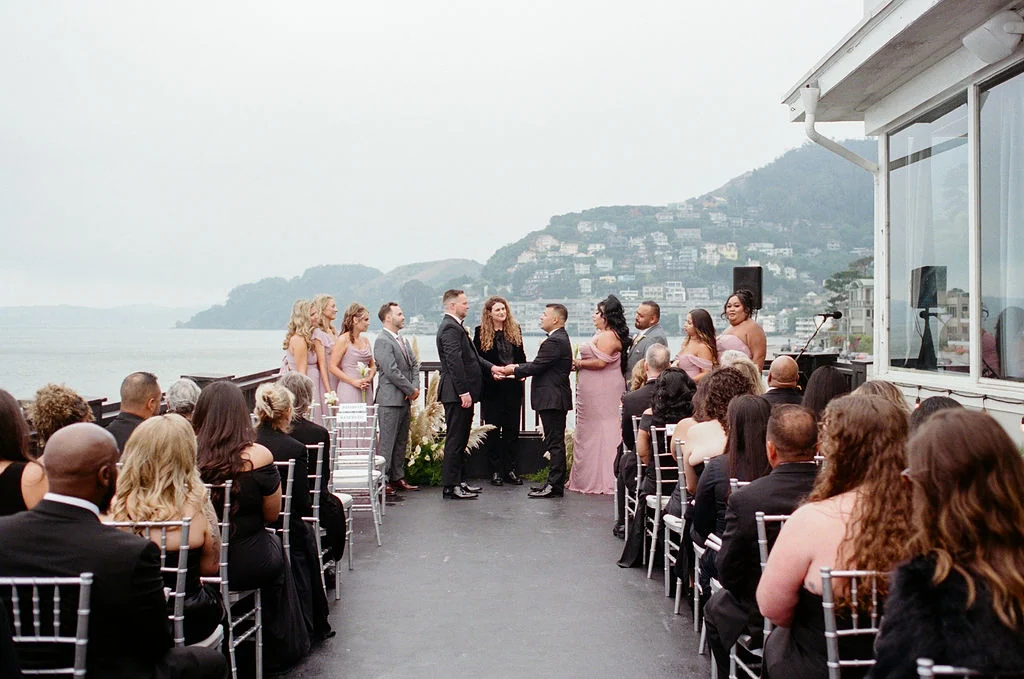
A good photography timeline answers two questions for every important picture. When will the subject be ready, and can the photographer actually be there? Work backward from the ceremony and the moment reception doors open. Protect short windows for the images that will help a reader understand the couple’s day, then leave the couple time to enjoy it.
Ask for the times only other people know
The florist knows when the aisle will be finished. Catering knows when guests enter the dining room. The officiant knows whether photographers can move during the ceremony. Ask each person directly. A schedule that says “details at 3” has little value if the place settings arrive at 4:45.
Choose the story-bearing details with the couple. If a parent embroidered the veil, ask when they will be together before the ceremony. If dinner takes place in a family greenhouse, work out when a wide view shows both the glass roof and the finished tables. Green Wedding Shoes’ real wedding guidelines ask for portraits, details, ceremony and reception. Those categories are a useful way to spot omissions in the schedule.
Walk through a one-photographer afternoon
Here is a sample itinerary with one location, a 4 p.m. ceremony, a first look and a 5:30 p.m. reception opening. The planner has confirmed that the ceremony setting is ready at 3:15 and the reception room is ready by 4:50. Adjust all blocks for the people, mobility needs, travel and light at your wedding.
- 1:30–2:00 p.m. Photograph invitations, the heirloom and the setting while the couple finishes preparations.
- 2:00–2:45 p.m. Cover getting dressed, the first look and portraits. At 2:45, gather the agreed family groups for 30 minutes.
- 3:15–3:35 p.m. Photograph the finished ceremony space. Allow the next 25 minutes for guest arrivals, camera setup and delays.
- 4:00–4:30 p.m. Cover the ceremony. Stay with the couple for greetings and reactions through 4:50.
- 4:50–5:20 p.m. Photograph the reception room, including a wide view, each distinct table treatment and the detail central to the story. Return to arrivals before doors open at 5:30.
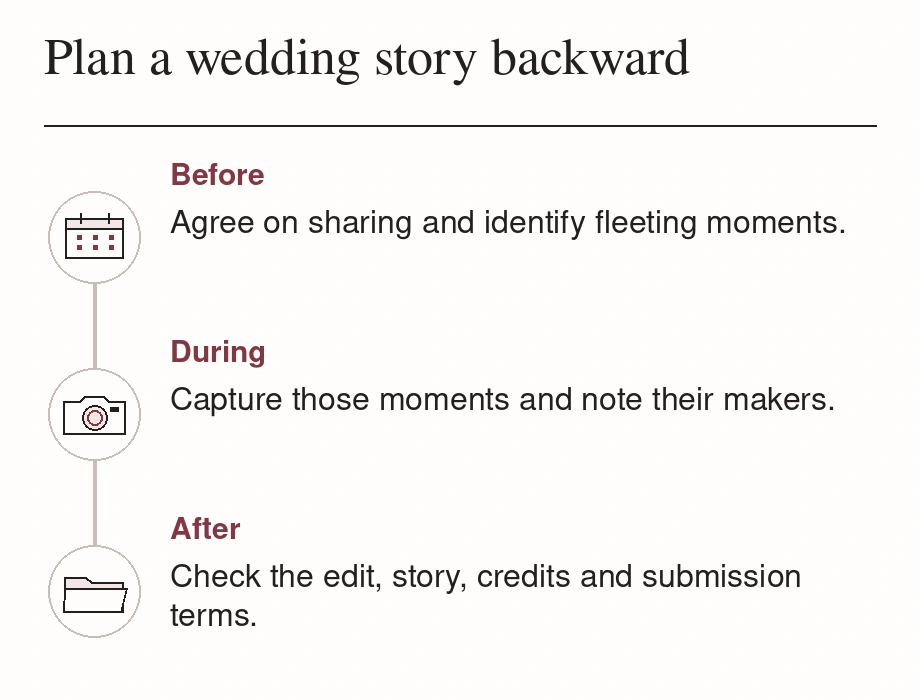
Resolve overlaps before the wedding
One person cannot cover grandparents at cocktail hour and a finished room on another floor at the same time. In this example, cocktail-hour coverage is partial. If that hour is where family speeches will happen, move the room photographs earlier if setup allows, ask about a second photographer, or decide which moments take priority. Lin and Jirsa’s timing guide allows roughly half an hour for the finished reception room and assigns that task to a second shooter in its example.
Give the planner a fallback order. If setup runs late, photograph the completed table that best explains the design, cover the entrance, and return for a wide view during dinner. A room full of guests can be the right photograph, especially for a story about a close-knit gathering.
Give the photographer a way to identify the pictures
Pair the schedule with a small credits sheet. Include the artisan who embroidered the veil, the person who set the table, and the family member who can identify people in group portraits afterward. Circle anything the couple wants kept private. When the gallery arrives, that sheet makes it possible to turn a promising frame into an accurate caption without asking the newlyweds to reconstruct the afternoon.
Common questions
Can we do family photos after the ceremony?
Yes. Place those groups in the cocktail-hour block and move one of its other tasks. Give one person the names and grouping order so the photographer can stay with the camera.
What if the reception shares the ceremony space?
Ask the venue how long the room change takes and whether anyone can enter during it. Capture a finished table once it is available, then schedule the wide room image once the reset is complete.
Sources
Keep reading
- How to pitch a multicultural or multiday wedding accurately
- How to photograph a fashion-led wedding for publication